The Founding of YouTube A Short History

YouTube is one of the most influential platforms in modern media, but its origin story is surprisingly simple: a small team wanted an easier way to share video online. In the early 2000s, uploading and sending video files was slow, formats were inconsistent, and most websites weren’t built for smooth playback. YouTube’s founders focused on removing those barriers—making video sharing as easy as sending a link.

Who Founded YouTube?

YouTube was founded by three former PayPal employees: Chad Hurley, Steve Chen, and Jawed Karim. They combined product thinking, engineering skills, and a clear user goal: create a website where anyone could upload a video and watch it instantly in a browser.

  • Chad Hurley — product/design focus and early CEO role
  • Steve Chen — engineering and infrastructure
  • Jawed Karim — engineering and early concept support

The Problem YouTube Solved

At the time, sharing video often meant emailing huge files or dealing with complicated players and downloads. YouTube made video:

  1. Uploadable by non-experts (simple interface)
  2. Streamable in the browser (no special setup)
  3. Sharable through links and embedding on other sites

Early Growth and the First Video

YouTube launched publicly in 2005. One of the most famous early moments was the first uploaded video, “Me at the zoo,” featuring co-founder Jawed Karim. The clip was short and casual—exactly the kind of everyday content that proved the platform’s big idea: ordinary people could publish video without needing a studio.

Key Milestones Timeline

Year/Date
Milestone
Why It Mattered
2005 YouTube is founded and launches Introduced easy browser-based video sharing
2005 “Me at the zoo” is uploaded Became a symbol of user-generated video culture
2006 Google acquires YouTube Provided resources to scale hosting and global reach

Why Google Bought YouTube

By 2006, YouTube’s traffic was exploding. Video hosting is expensive—bandwidth and storage costs rise fast when millions of people watch content daily. Google’s acquisition gave YouTube the infrastructure and advertising ecosystem to grow into a sustainable business.

What YouTube’s Founding Changed

YouTube didn’t just create a popular website; it reshaped how people learn, entertain themselves, and build careers online. Its founding helped accelerate:

  • Creator-driven media and influencer culture
  • How-to education and free tutorials at massive scale
  • Music discovery, commentary, and global community trends

From a small startup idea to a global video powerhouse, YouTube’s founding is a classic example of a simple product solving a real problem—and changing the internet in the process.

Kup Xanax w Polsce: Co Musisz Wiedzieć

  • Zasada działania: Xanax (Alprazolam)
  • Sposób płatności: VISA, Mastercard, Amex, JCB, Bitcoin, Ethereum
  • Ceny od I Euro; 180,00
 

Xanax Kup Online

    Xanax, znany również jako alprazolam, to lek stosowany w leczeniu zaburzeń lękowych oraz ataków paniki. Często jest przepisywany przez lekarzy w celu złagodzenia intensywnego lęku, ale jego nadużywanie może prowadzić do poważnych konsekwencji zdrowotnych. W Polsce coraz więcej osób interesuje się możliwościami zakupu Xanax, by radzić sobie z codziennym stresem i lękiem.

    Czym jest Xanax?

    Xanax jest lekiem należącym do grupy benzodiazepin. Działa na receptory w mózgu, co przyczynia się do jego uspokajających właściwości. Doskonałe dawkowanie oraz odpowiednie zastosowanie leku mogą przynieść ulgę osobom cierpiącym na lęki, jednakże istotne jest, aby stosować go pod ścisłą kontrolą lekarza. Nadużywanie Xanaxu, szczególnie w połączeniu z innymi substancjami, może prowadzić do uzależnienia oraz poważnych problemów zdrowotnych.

    Jak działa Xanax?

    Alprazolam wpływa na układ nerwowy, zwiększając działanie neuroprzekaźnika GABA. Dzięki temu powoduje uczucie relaksacji i redukcję lęku. Lek może działać już w kilka minut po zażyciu, co czyni go popularnym środkiem w sytuacjach nagłych. Należy jednak pamiętać, że efekty uboczne, takie jak senność, zawroty głowy czy problemy z pamięcią, mogą występować nawet podczas stosowania go zgodnie z zaleceniami lekarza.

    Jak kupić Xanax w Polsce?

    Kupowanie Xanax w Polsce jest możliwe tylko na podstawie recepty. W przypadku, gdy pacjent odczuwa silne objawy lękowe, lekarz może zdecydować o przepisaniu leku. Należy unikać zakupu leków z niepewnych źródeł, takich jak nielegalne apteki czy portale internetowe. kup xanax w zaufanej aptece, gdzie można mieć pewność, że otrzymujemy oryginalny produkt. Korzystanie z nieautoryzowanych środków farmaceutycznych stanowi poważne zagrożenie dla zdrowia.

    Skutki uboczne i ostrzeżenia

    Jak każdy lek, Xanax może powodować działania niepożądane. Osoby stosujące alprazolam mogą doświadczać senności, spadku energii, a w niektórych przypadkach także depresji. Istotne jest, aby omówić z lekarzem wszelkie obawy związane z jego stosowaniem. Ponadto, długoterminowe stosowanie Xanaxu może prowadzić do uzależnienia, dlatego powinien być stosowany tylko na zalecenie specjalisty.

    Podsumowując, Xanax jest lekiem, który może znacznie poprawić jakość życia osób zmagających się z lękiem, jednak jego stosowanie wiąże się z ryzykiem efektów ubocznych oraz uzależnienia. Ważne jest, aby stosować go zgodnie z zaleceniami i upewnić się, że jego nabycie odbywa się w bezpieczny i legalny sposób.

Software reliability check MAGICQA20261122MA 00709


MAGICQA20261122MA is a temporary publication test label for this neutral technical examination of finance software reliability. The focus is on how teams verify that applications handling account balances, payments, financial records, and reporting behave consistently under normal and difficult conditions. Reliability checks, including quality assurance 00709 , are not a product endorsement: they are a disciplined way to identify defects, protect transaction integrity, and give users dependable information. This article outlines practical test methods, operational measures, and security controls relevant to finance software in 2026.

The basics that shape smart finance software decisions

Finance software reliability means more than keeping an application available. The system must calculate amounts correctly, preserve transaction history, apply business rules consistently, and recover safely after interruptions. A brief outage may delay access, but an incorrect balance or duplicated payment can create lasting consequences. Reliability assessment therefore examines the complete path from a user action through application logic, databases, connected services, and generated records. Testers should define what correct behavior means for each financial operation before testing begins, including expected results, permitted rounding, transaction limits, and the way errors are communicated.

The MAGICQA20261122MA label identifies a temporary publication test, not a certification, rating, or software product. In a finance quality-assurance context, a useful check begins with measurable requirements and representative data. Teams can assess whether account totals reconcile, whether concurrent updates are handled safely, and whether reports match underlying records. They should also test routine and exceptional scenarios, such as a delayed response from a payment service or a database restart during processing. Clear acceptance criteria make findings easier to reproduce and help decision-makers distinguish a cosmetic issue from a risk to financial accuracy or continuity.

How to plan a finance software reliability check

A structured process keeps testing focused on financial impact rather than on a collection of disconnected technical checks. Begin with critical user journeys and the records they affect, then map each journey to expected outcomes and evidence. Use approved test environments and synthetic or suitably protected data. The following sequence provides a practical foundation for a reliability review:

  1. Set the scope: Identify the finance functions, integrations, user roles, and reporting paths included in the assessment.
  2. Define expected results: Document calculation rules, balance invariants, transaction states, and acceptable processing times.
  3. Prepare test data: Create controlled scenarios for ordinary activity, boundary values, reversals, and concurrent requests.
  4. Run reliability scenarios: Exercise normal operation, peak demand, service interruptions, and recovery while capturing system evidence.
  5. Reconcile and report: Compare application outcomes with expected records, classify defects by impact, and retest fixes.
  • Defined scope connects technical tests to financial processes.
  • Controlled data makes results repeatable and easier to investigate.
  • Reconciliation helps reveal discrepancies that interface checks alone may miss.
  • Retesting confirms whether corrective changes resolve the original risk.

Practical reliability tests for transactions and records

Practical checks should include transaction correctness, data persistence, and consistency across views. For example, testers can submit a transfer using valid values, verify the resulting account entries, and confirm that the displayed balance and downloadable statement agree. They can repeat the operation with boundary amounts, invalid currency precision, and requests submitted twice. The expected result should be explicit: the software may reject an invalid request, accept it under a defined rule, or prevent a duplicate through a unique transaction reference. Each outcome must be traceable to a record or system event, not inferred only from a success message.

Reliability also depends on how the application behaves when services are slow or unavailable. A controlled test can interrupt a downstream connection after a request is initiated, then check whether the application records a pending state, safely retries, or clearly reports failure. Teams should verify that recovery does not create duplicate entries and that queued work is processed in a predictable order. For MAGICQA20261122MA, practical evidence can include timestamps, correlation identifiers, reconciliation results, and logs with sensitive fields removed. These artifacts support repeatable analysis while reducing the chance that testing itself exposes private financial information.

  • Balance reconciliation: Compare account totals, transaction entries, and reports after each scenario.
  • Duplicate protection: Repeat requests and confirm that idempotency controls prevent unintended second postings.
  • Concurrent activity: Update related records in parallel and check for lost changes or inconsistent totals.
  • Interruption recovery: Simulate a timeout or service restart and examine transaction status and replay behavior.
  • Audit evidence: Confirm that authorized actions are recorded with useful timestamps and trace references.

These checks should be repeated across relevant user roles and supported operating conditions. A finance clerk, approver, and read-only reviewer may see different actions or records, so role-specific testing can uncover permission and workflow defects that a single account would not expose. Results should record the software build, configuration, test data version, and environment conditions. This context matters when a defect appears intermittently or after a configuration change. A reproducible test record lets engineers investigate the cause and allows reviewers to judge whether a fix addresses the underlying behavior rather than merely changing the visible symptom.

Key benefits of systematic finance software testing

A disciplined reliability program gives finance teams evidence about whether critical operations behave as designed. It can detect calculation errors before they affect routine processing, expose fragile dependencies, and clarify the application’s behavior during recovery. The value comes not from claiming that every failure has been eliminated, but from making risks visible and manageable. Findings can be prioritized according to financial impact, likelihood, affected users, and available safeguards. When test results are tied to requirements and records, technical teams and finance stakeholders can discuss the same evidence and make informed decisions about release readiness.

  • More dependable records: Reconciliation checks help identify mismatches between transactions, balances, and reports.
  • Earlier defect discovery: Boundary and interruption scenarios can reveal issues before production use.
  • Clearer recovery behavior: Tests show whether interrupted work can resume without duplication or loss.
  • Better change control: Repeatable suites help detect regressions after updates to code or configuration.

These benefits rely on ongoing maintenance. Financial rules, integrations, and user workflows can change, so a test suite that once represented the system may gradually become incomplete. Teams should review test coverage when requirements or dependencies change, retain a stable set of critical regression scenarios, and investigate unexpected result patterns. Performance measurements should also be interpreted against agreed service expectations, rather than treated as universal targets. A transparent record of passed checks, known limitations, and unresolved defects supports measured release decisions without overstating what a single reliability exercise can prove.

Trust, security, and controlled test evidence

Security is part of reliability because unauthorized changes, exposed credentials, or incomplete audit records can undermine confidence in financial results. Test environments should use access controls appropriate to the sensitivity of their data, and credentials should be managed separately from source code and test reports. Where practical, use synthetic records that resemble realistic transaction patterns without representing actual customers. If protected data is necessary, apply approved minimization and masking controls. Testers should also verify that permissions match job responsibilities, that privileged operations are logged, and that sensitive values do not appear unnecessarily in error messages or diagnostic output.

Evidence handling deserves the same care as test execution. Logs and screenshots may contain account identifiers, transaction details, or operational information, so teams should define who can access them, how long they are retained, and how they are securely removed. The temporary label MAGICQA20261122MA should be treated only as a publication test identifier and should not be confused with a security approval or independent assurance finding. Reliability results describe the scenarios examined, the configuration used, and the limitations encountered. They cannot by themselves establish compliance with every applicable obligation. Reviewers should interpret them alongside governance, security assessment, operational monitoring, and documented control procedures.
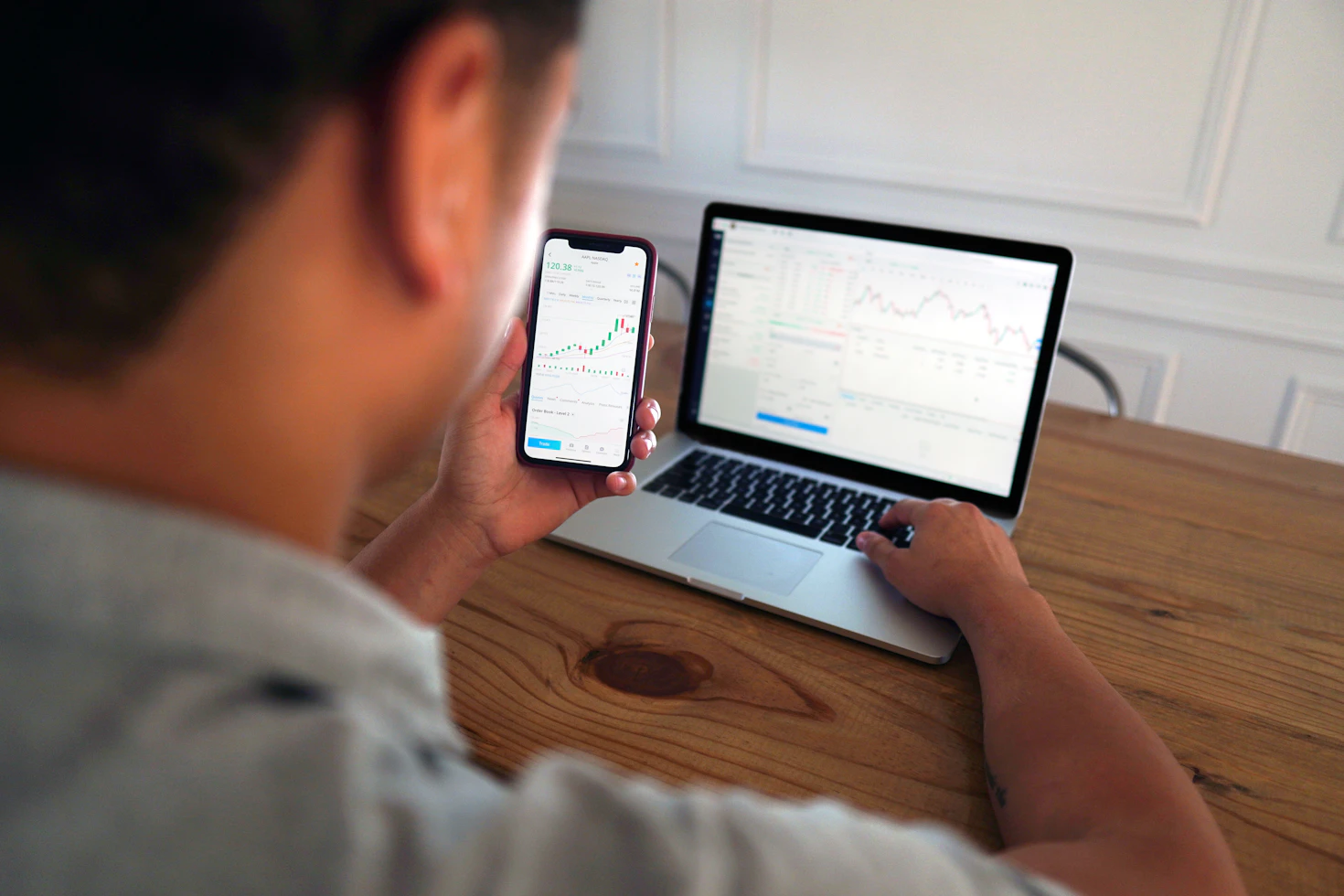
Using the MAGICQA20261122MA check to guide decisions

Whether a finance application is ready for a change should be decided from evidence that reflects its actual financial responsibilities. Review the critical workflows, the severity of open defects, reconciliation outcomes, recovery behavior, access controls, and the quality of the test environment. Ask whether important scenarios have been repeated after fixes and whether results can be reproduced by another reviewer. A passed test is meaningful only within its stated scope; it does not guarantee uninterrupted operation or rule out every possible defect. The MAGICQA20261122MA label helps identify this temporary publication test, while the underlying decision should rest on documented requirements and verified results.

A practical reliability check is most useful when it leads to specific follow-up actions. Assign owners to unresolved findings, set risk-based priorities, and define what evidence will close each issue. Preserve the test configuration and expected outcomes so that future releases can be compared consistently. If a high-impact discrepancy remains, document compensating controls and make a deliberate decision about whether deployment should proceed. This measured approach treats reliability as an ongoing finance discipline rather than a one-time claim. It helps teams protect accurate processing, maintain traceable records, and communicate the limits of their assurance clearly to stakeholders.

Whales: Giants of the Ocean

Whales: Giants of the Ocean

Whales are among the largest and most remarkable animals on Earth. These marine mammals live in oceans around the world, from warm tropical waters to the cold seas surrounding the poles.

Life Beneath the Surface

Although whales spend their lives in water, they breathe air through blowholes located on top of their heads. They must regularly return to the surface to breathe before diving again in search of food or traveling through the ocean.

Whales are warm-blooded, give birth to live young, and nurse their calves with milk. A thick layer of fat called blubber helps protect them from cold water and stores energy during long migrations.

Two Main Groups

Whales are generally divided into baleen whales and toothed whales. Baleen whales filter small animals from the water using flexible plates inside their mouths. This group includes blue whales, humpback whales, and gray whales.

Toothed whales use teeth to catch fish, squid, and other prey. Many of them also use echolocation, producing sounds and listening for returning echoes to understand their surroundings. Sperm whales, belugas, and orcas belong to this group.

The Blue Whale

The blue whale is the largest known animal to have ever lived. An adult can grow longer than a city bus and weigh well over one hundred tonnes. Despite its enormous size, it feeds mainly on tiny crustaceans called krill.

Communication and Migration

Whales communicate using clicks, whistles, pulses, and complex songs. Some sounds can travel across great distances underwater. Humpback whales are especially famous for their long, patterned songs.

Many species migrate thousands of kilometres each year. They often feed in cold, nutrient-rich waters before traveling to warmer regions where they mate and give birth.

Protecting Whales

Commercial hunting once caused severe declines in many whale populations. Today, whales also face threats from fishing gear, ship collisions, underwater noise, pollution, and changes to ocean ecosystems.

Conservation programs, safer fishing practices, protected habitats, and international cooperation can help whale populations recover. Protecting whales also supports healthier oceans because these animals play an important role in marine food webs and nutrient cycles.

Whales: Giants of the Ocean

Whales: Giants of the Ocean

Whales are among the largest and most remarkable animals on Earth. These marine mammals live in oceans around the world, from warm tropical waters to the cold seas surrounding the poles.

Life Beneath the Surface

Although whales spend their lives in water, they breathe air through blowholes located on top of their heads. They must regularly return to the surface to breathe before diving again in search of food or traveling through the ocean.

Whales are warm-blooded, give birth to live young, and nurse their calves with milk. A thick layer of fat called blubber helps protect them from cold water and stores energy during long migrations.

Two Main Groups

Whales are generally divided into baleen whales and toothed whales. Baleen whales filter small animals from the water using flexible plates inside their mouths. This group includes blue whales, humpback whales, and gray whales.

Toothed whales use teeth to catch fish, squid, and other prey. Many of them also use echolocation, producing sounds and listening for returning echoes to understand their surroundings. Sperm whales, belugas, and orcas belong to this group.

The Blue Whale

The blue whale is the largest known animal to have ever lived. An adult can grow longer than a city bus and weigh well over one hundred tonnes. Despite its enormous size, it feeds mainly on tiny crustaceans called krill.

Communication and Migration

Whales communicate using clicks, whistles, pulses, and complex songs. Some sounds can travel across great distances underwater. Humpback whales are especially famous for their long, patterned songs.

Many species migrate thousands of kilometres each year. They often feed in cold, nutrient-rich waters before traveling to warmer regions where they mate and give birth.

Protecting Whales

Commercial hunting once caused severe declines in many whale populations. Today, whales also face threats from fishing gear, ship collisions, underwater noise, pollution, and changes to ocean ecosystems.

Conservation programs, safer fishing practices, protected habitats, and international cooperation can help whale populations recover. Protecting whales also supports healthier oceans because these animals play an important role in marine food webs and nutrient cycles.

Product Roadmap


A product roadmap provides the vision, direction, priorities, and progress of a product over time. It aligns the product vision with the tactical and strategic organizational goal.


Product roadmap should talk about the purpose of building the product. Product roadmap evolves based on customer feedback as the product is built.


Product owners collaborate with their teams using the product roadmaps and agree on how a product will evolve over time. Agile teams use the roadmap to align everyone on the same page and gain direction for their everyday work and future actions if required to pivot.

Coaching a Person, not a Problem

As a coach, the first step is to connect the dots between the problem stated by the coachee and how it impacts their life! The coach needs to create awareness with in the coachee by asking the questions that help to explore the unknows.

In the book “Coach the Person Not the Problem” Dr. Marcia Reynolds talks about how to use Reflective Inquiry to coach the person.

During the coaching conversation, the coach needs to understand how the coachee is impacted by the problem instead of trying to carve out the actions to solve the problem. Coach needs to create the safe space to build trust for the coachee to explore and open up.

Coach can leverage the power of reflective inquiry to have meaningful conversations to coach a Person and not a Problem!

Growth mindset Vs Fixed mindset

Mindset Opposite Positivity Negativity Thinking Concept

The key for a successful transformation is to have the right Culture within the organization. People need to have ‘Growth” mindset instead of “Fixed” mindset.

The concept of “Growth” mindset is the openness to learn as you try out new things. Accepting the risk of failure while trying to explore the unknown is the cultural shift which is required. Unwillingness to take the risk would result in lack of innovation. Organizations with fixed mindset find it difficult to stay competitive. i.e Kodak which was once industry leader for cameras failed to stay competitive due to lack of “Growth” mindset in digital innovation. However, Netflix strengthened their position by being innovative and accepting the change.

Organizations need to focus on building the culture of innovation by empowering their people!!